



Whole House Water Softener: A Smart Solution for Healthier Homes and Cleaner Water

Water constitutes a very vital element in our everyday lives. We drink it, cook with it, bathe with it, clean with it and wash clothes with it frequently without even considering its quality. However, the kind of water used in your house can be of great consequence to your appliances, pipes as well as your skin and hair. The problem of hard water is common in many households in the United States and the water contains high concentrations of minerals like calcium and magnesium. A whole house water softener is an investment to be made here.
Understanding Hard Water and Its Effects
Hard water does not present a direct health hazard, but it can be a source of many inconveniences whenever it comes to the home. The hard waters that contain some minerals are likely to accumulate over a period, forming scale formation in pipes, faucets, and washing machines and appliances such as dishwashers. Such mineral deposits may slow down water flow, destroy water appliances, and decrease their lifespan.
Having observed the white spots on glassware, a dull-looking laundry, dry skin after taking a shower you are likely to notice hard water. In the long run this accumulation may prove to be expensive because you will be consuming an increased amount of soap, energy and cleaning chemicals to counter the hardness of water.
This issue can be solved at the source by a whole house water softener which purifies all the ingressing water of your residence. It eliminates the surplus minerals, making sure that all the taps provide soft and clean water that is efficient.
What is a Whole House Water Softener?
A whole house water softener is a device that is used to treat hard water in your entire house. This is in contrast with small filters which only serve one faucet or one shower since this system is connected to your main line of water supply. Water passes through the softener where it is subjected to a process called ion exchange in which calcium and magnesium ions are exchanged with sodium or potassium ions.
This helps to turn hard water into soft water thereby preventing the formation of scales hence enhancing the overall quality of the water that is consumed in the house. The outcome is smoother and cleaner water which will last your plumbing system years.
You may read at the Water Quality Association more about the working of water softeners and the science of the process of treating water.
and EPA’s Safe Drinking Water Information These are credible, high authority sources, which provide a detailed information on water treatment systems, both of which are trusted.
Benefits of a Whole House Water Softener
The advantages of having a whole house water softener are not limited to the fact that the water will taste good. It adds long-term value to your family and health.
The first difference that is observable is on your cleaning routine. Soft water will have better lathering properties of soap and detergent, or in other words you will use less and achieve higher results. Plates and cutlery are shining, fabrics remain fluffy and no streaks or spots are left behind.
To wash yourself, soft water will be softer to your skin and hair. It is quite common to hear the complaints of many individuals that since they installed a water softener, their skin is smoother, and their hair is shinier and less brittle. This is due to the fact that soft water does not take away natural oils as hard water does.
A water softener also prolongs the life span of appliances at home. In the absence of hard water deposits that block the inner section of your dishwasher, washing machine, or water heater these appliances perform better and have a longer lifespan. In the long run, this would be equated to huge savings on repair and energy bills.
Moreover, the plumbing system is improved. There will be no accumulation of scales on the pipes and thus, blockages are avoided and hence, there will be constant water supply in your home.
Choosing the Right System
There are not water softeners. In choosing the appropriate system that fits in your house, what you must put into consideration is the size of your household, the amount of water you use and the level of hardness of your domestic water source. It is simple to check the hardness of water with kits that are found on the web or in your local water authority.
The most widely used water softeners are salt-based water softeners where sodium is used to substitute the minerals. Nevertheless, salt-free systems are becoming more popular with the people who would like a more environmentally-friendly system. These systems involve filtering or conditioning of the structure of the mineral ions, which make them less capable of forming scale without the addition of the salt to the water.
There are such brands as Culligan, Aquasana, and SpringWell, which have many different models of water softeners of high quality. To learn more about the existing possibilities, you may read reputable sources like Consumer Reports or Home Depot’s Water Softener Buying Guide,. both with professional guidance and commentaries and comparisons.
Installation and Maintenance
The entire process of installing a whole house water softener is supposed to be carried out by a skilled plumber in order to make sure that the system is fitted properly on your main water supply. The system can be maintained on a regular basis once it is installed.
In the case of salt based softeners, it involves adding more salt to the salt tank every so often and ensuring that the brine tank is clean. Salt-free systems normally need to have the cartridges replaced or the media changed after every few years. A good care will help your system to take a long time to deliver soft water effectively.
Environmental Considerations
A major issue that is frequently brought up about water softeners is their impact on the environment especially in regions where discharge of salts is highly regulated. Luckily, a good number of the contemporary systems are structured in an environmentally friendly technology that reduces wastage and water wastage.
Indicatively, in some models the regeneration takes place when required as opposed to on a regular basis which minimizes salt and water consumption. Moreover, the salt free ones do not produce any brine discharge at all so it is an excellent option among eco conscious households. Websites such as Energy.gov and NRDC contain useful information about sustainable water consumption and eco-friendly household systems to individuals who want to be greener.
The Long-Term Value of a Water Softener
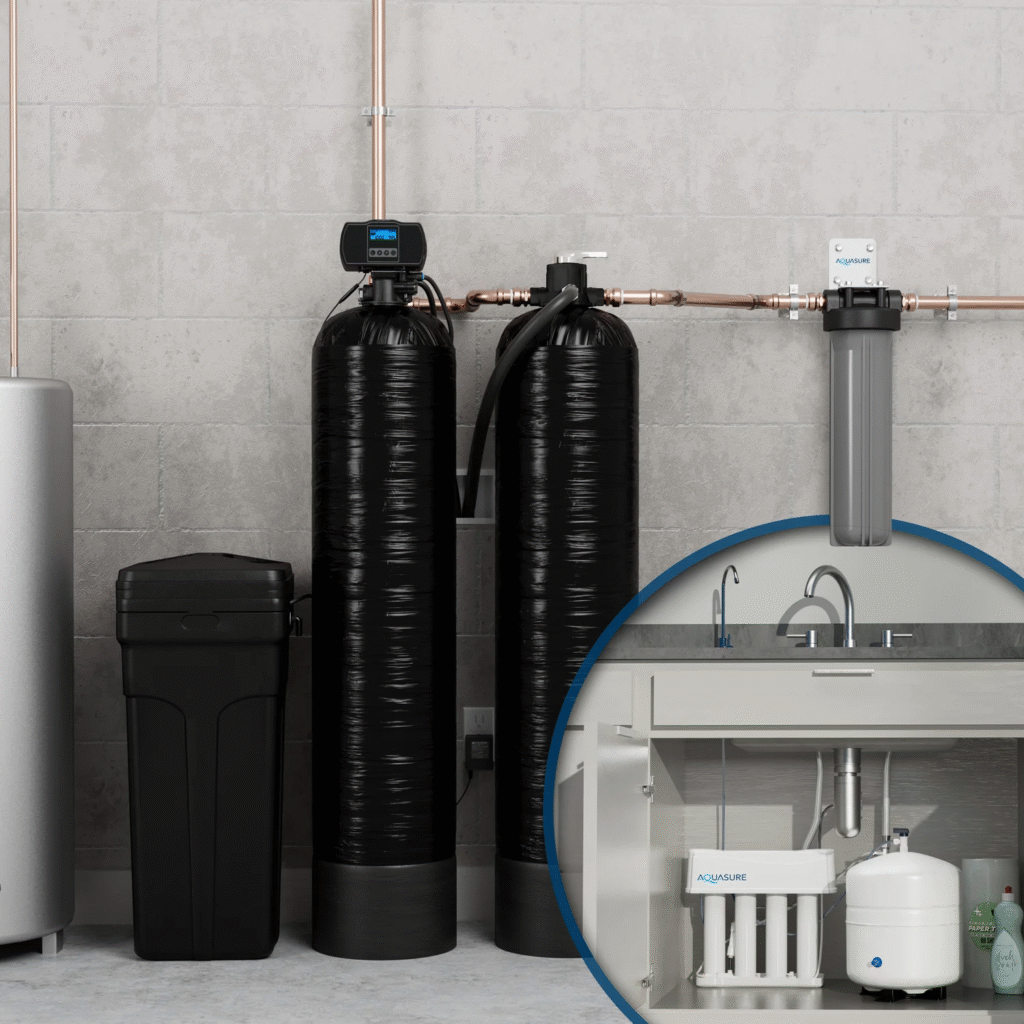
It is more than merely a matter of convenience when it comes to making an investment in whole house softener water- It is a matter of home health and efficiency in the long run. Although the initial expenditure might be expensive, it is worth it in the long run since you save on energy, repairs of appliances and also through less of the cleaning products.
In addition, soft water also leads to improved life quality. Whether it is the feel of your laundry, or the state of your skin, all the different elements of your day-to-day life are better when you have soft, clean water running through your pipes.
Conclusion
The entire house water softener is an easy, but mighty upgrade, which changes the quality of water in your house. It maintains your plumbing, conserves energy, increases the level of comfort in your day-to-day life, and even keeps your appliances beautiful. The smoothness of the skin, cleanliness of the laundry, are short-term and long-term benefits.
In the modern world, when home maintenance and health are tightly connected, a better lifestyle will be a step in the direction of clean and soft water. To be guided and help with the reviews and installation, one can refer to the water quality resources of the high authority, such as Water Quality Association
After all, the decision to install a whole house water softener is the decision to live in comfort, to save money and to save on time and to save on headache–since all the water in your home should serve you, as opposed to fight against you.
FAQs
What is the main purpose of a whole house water softener?
Its main function is to remove hard minerals like calcium and magnesium from water, preventing scale buildup and improving water quality throughout your home.
How do I know if my home needs a water softener?
If you notice white residue on faucets, soap that doesn’t lather well, or dry skin and hair, your water is likely hard and could benefit from a softening system.
How long does a water softener last?
A well-maintained water softener typically lasts between 10 to 15 years, depending on the model and water quality.
Is soft water safe to drink?
Yes, soft water is safe for most people to drink. However, those on low-sodium diets may prefer potassium-based systems instead of sodium-based ones.
Can a water softener help with rusty or discolored water?
Water softeners primarily target hardness, not iron or other contaminants. If you have rust-colored water, consider pairing your softener with a filtration system.