



Topic Clusters vs Single Posts: Why Multiple Stories Win in 2026
In 2025, you might have pumped out dozens of standalone blog posts, each chasing its own keyword tail, only to watch most of them sink into search oblivion. Sound familiar? The single-post grind is exhausting, and Google’s algorithm has evolved way beyond it. Enter topic clusters also known as “Your Topics | Multiple Stories” a strategy that’s not just surviving but thriving in the AI-driven search landscape of 2026.
Consider this: Websites leveraging topic clusters are reporting 30–100% organic traffic surges, with some clusters holding rankings 2.5 times longer than isolated posts. Real-world data from agencies like Minuttia shows a single well-built cluster pulling in over 1,000 keywords and 100 daily clicks. If you’re still betting on solo articles, you’re leaving traffic on the table.
In this comprehensive 2026 guide, we’ll break down the old vs. new showdown, dive into proven case studies, unpack the technical magic behind clusters, and hand you a step-by-step blueprint to implement them. Plus, tools, pitfalls, and quick wins to get you started. Ready to build topical authority and dominate SERPs? Let’s jump in.
Table of Contents
- What Is ‘Your Topics | Multiple Stories’ (aka Topic Clusters)?
- Old Way vs New Way: Head-to-Head Comparison
- Real Case Studies & Proof
- Why It Works So Well in 2026 (Technical Reasons)
- How to Implement It Step-by-Step (Practical Guide)
- Best Tools for Topic Clusters in 2026
- Common Mistakes to Avoid + Quick Wins
- Conclusion + CTA
- FAQ
What Is ‘Your Topics | Multiple Stories’ (aka Topic Clusters)?
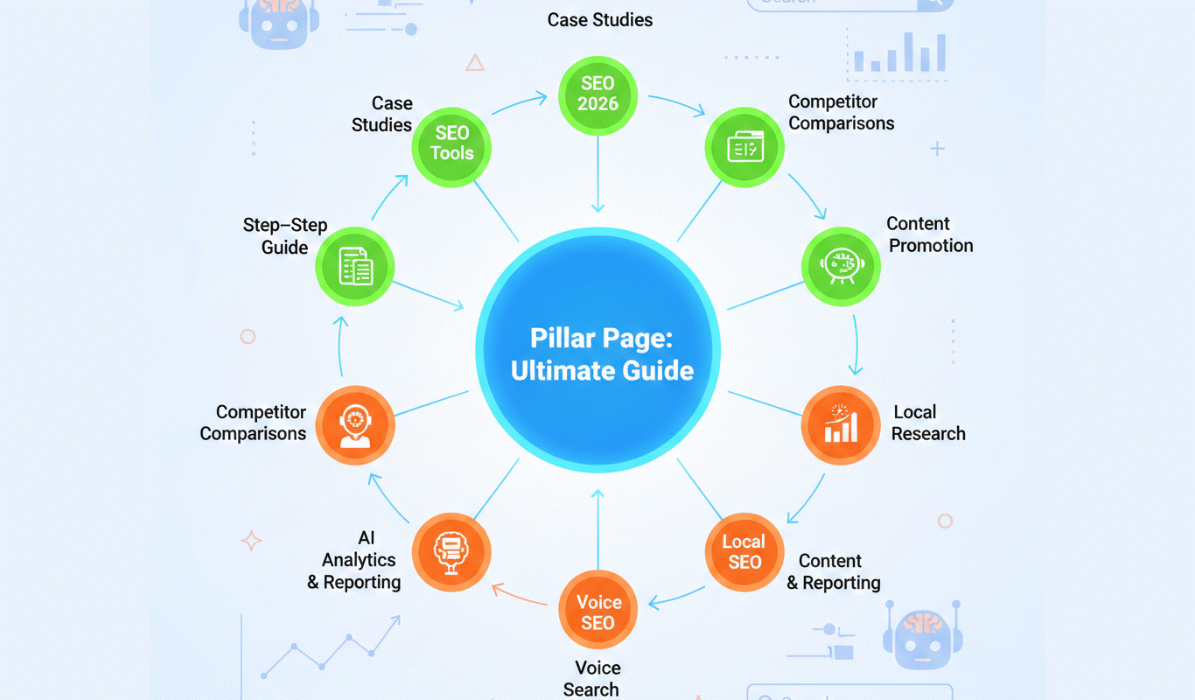
At its core, “Your Topics | Multiple Stories” is Google’s way of nudging content creators toward deeper, more interconnected ecosystems. Think of it as topic clusters in action. A topic cluster revolves around a central “pillar” page that provides a broad, authoritative overview of a main topic. Surrounding it are “clusters” or supporting pages of multiple stories that dive into specific subtopics, all linked back to the pillar and each other.
Visualize this: The pillar is the hub, like a comprehensive guide to “SEO in 2026.” Cluster pages branch out as spokes, covering niches such as “AI Overviews Optimization,” “Entity-Based SEO,” or “Topic Cluster Strategies.” This structure isn’t random; it’s designed to mirror how users search and consume information today jumping from broad queries to detailed answers without leaving your site.
Contrast this with the single-post model, where each article stands alone, targeting a handful of keywords in isolation. Sure, it worked in the early 2010s when keyword stuffing was king, but fast-forward to 2026: Search engines like Google prioritize semantic understanding and user intent over siloed content. Topic clusters evolved from HubSpot’s early experiments in the 2010s, gained traction with Google’s Helpful Content Update in 2022, and became essential with the rise of AI Overviews and generative search in 2024–2025.
Why the shift? Users don’t search in vacuums. A query like “best SEO tools” might lead to follow-ups on “Ahrefs alternatives” or “keyword clustering AI.” Clusters anticipate this, creating a web of content that keeps visitors engaged longer, reduces bounce rates, and signals to algorithms that your site is the go-to expert.
In practice, clusters boost topical authority by covering a topic exhaustively. Google’s algorithms, powered by entities and semantic search, reward sites that demonstrate depth. For instance, a cluster on “Digital Marketing Trends” could include 10–20 pages, ranking for hundreds of related terms instead of just a few.
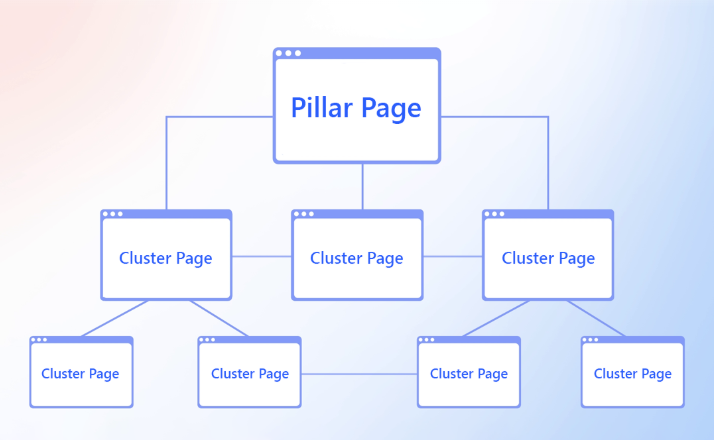
WriterZen – What Are Pillar Pages and How They Boost Your Rankings
This diagram shows the pillar in the center with supporting pages linking bidirectionally, optimizing crawl efficiency and user navigation. In 2026, ignoring clusters means competing with AI-generated summaries that pull from clustered, authoritative sources putting single posts at a massive disadvantage.
Old Way vs New Way: Head-to-Head Comparison
The battle between single-post strategies and topic clusters isn’t new, but in 2026, the winner is clear: Multiple stories dominate for sustainability, engagement, and ROI. Let’s break it down side by side, backed by fresh data from 2025 analyses projected into this year.
| Aspect | Single-Post Strategy (Old Way) | Multiple Stories / Topic Clusters (2026 Winner) |
| Topical Authority | Weak – isolated pages with limited interconnections | Strong – Establishes expertise across an entire subject, favored by semantic search |
| Ranking Longevity | Drops quickly after initial publication | Holds 2–3× longer, with clusters maintaining visibility amid algorithm updates |
| Traffic Growth Potential | Capped at 10–30% from one article | 30–100%+ across the cluster, with examples like 100x boosts |
| Bounce Rate & Engagement | High bounce (40–60%), short dwell times | 2–3× higher time on site, lower bounce via internal navigation |
| AI Overview Citation | Rare, due to lack of comprehensive depth | Significantly higher, as clusters feed AI with structured data |
| Keyword Coverage | 1–5 keywords per post | 100–1,000+ across the ecosystem, capturing long-tails |
| Maintenance | Requires constant new posts to chase trends | Evergreen pillars with periodic cluster updates for long-term efficiency |
This table highlights why clusters are pulling ahead. For example, in SERPs, single posts might rank briefly for competitive terms but fade as Google favors entities with broader coverage. Visual proof? Check these before-and-after SERP examples where clusters transformed rankings:
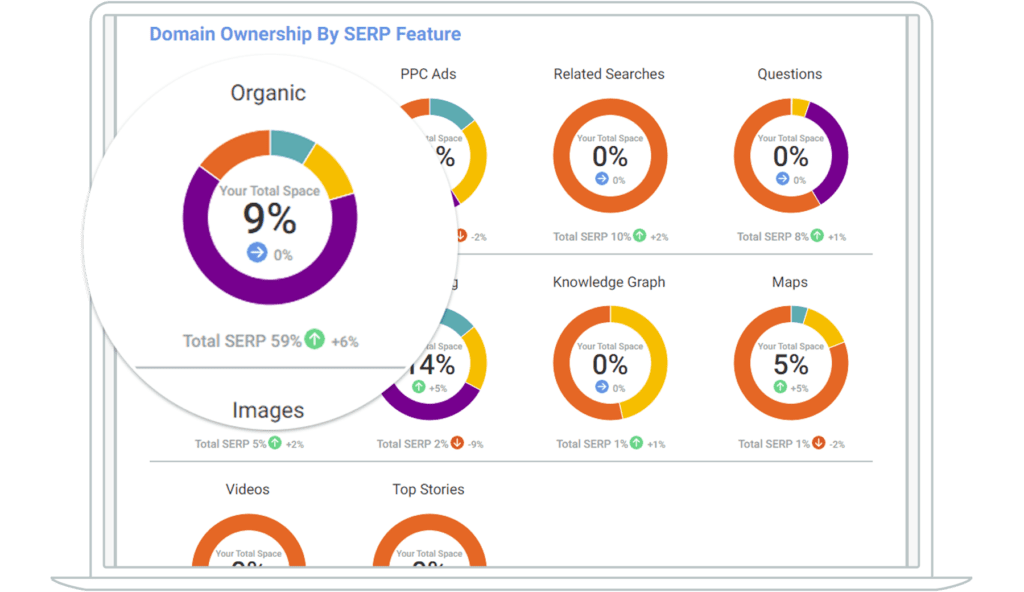
Quantify your share of Google page one
Diving deeper: Single posts often suffer from “pogo-sticking” users bounce back to search results for more info. Clusters prevent this by offering seamless paths to related content, boosting signals like time on page. In 2026, with GEO (Generative Engine Optimization) on the rise, clusters align perfectly with AI’s need for context-rich sources. Data from late 2025 shows clustered sites enjoying 119% page view increases in e-commerce niches, turning informational traffic into conversions.
Ultimately, the old way feels like shouting into the void; the new way builds a conversation that Google amplifies.
Real Case Studies & Proof
Theory is great, but results seal the deal. Here are updated 2026 insights from real implementations, drawing on 2025 data that’s carrying momentum into this year. These cases show clusters delivering explosive growth where single posts faltered.
Case Study 1: Thruuu’s Core Web Vitals Cluster (100x Traffic Surge)
SEO tool Thruuu revamped a fading 2020 single post on “Core Web Vitals” into a robust cluster in 2023, and the gains have compounded through 2025. The pillar became an updated ultimate guide, with 5–10 cluster pages on metrics like LCP, FID, CLS, and tools. Bidirectional linking was key.
Results: From low single-digit weekly views, the cluster hit 2,000+ weekly page views, a 100x leap. By 2026, it’s sustained amid AI updates, generating consistent leads. Lesson: Splitting depth into interconnected stories revives content and builds authority Google’s algorithms crave.
Case Study 2: Minuttia & Viral Loops (1,100+ Keywords, 100 Daily Clicks)
Agency Minuttia crafted a cluster for client Viral Loops around “Referral Marketing Strategies.” The pillar offered a broad hub; 10+ clusters tackled templates, A/B testing, and integrations—no major backlinks needed, just quality and links.
Outcomes: Ranked for 1,100+ keywords, pulling ~100 organic clicks daily (~3,000 monthly). In 2026, it’s held steady, outlasting single-post competitors. Key takeaway: Exhaustive intent coverage turns one topic into a traffic machine, with 2.5x longer rankings.
See the growth trajectory:
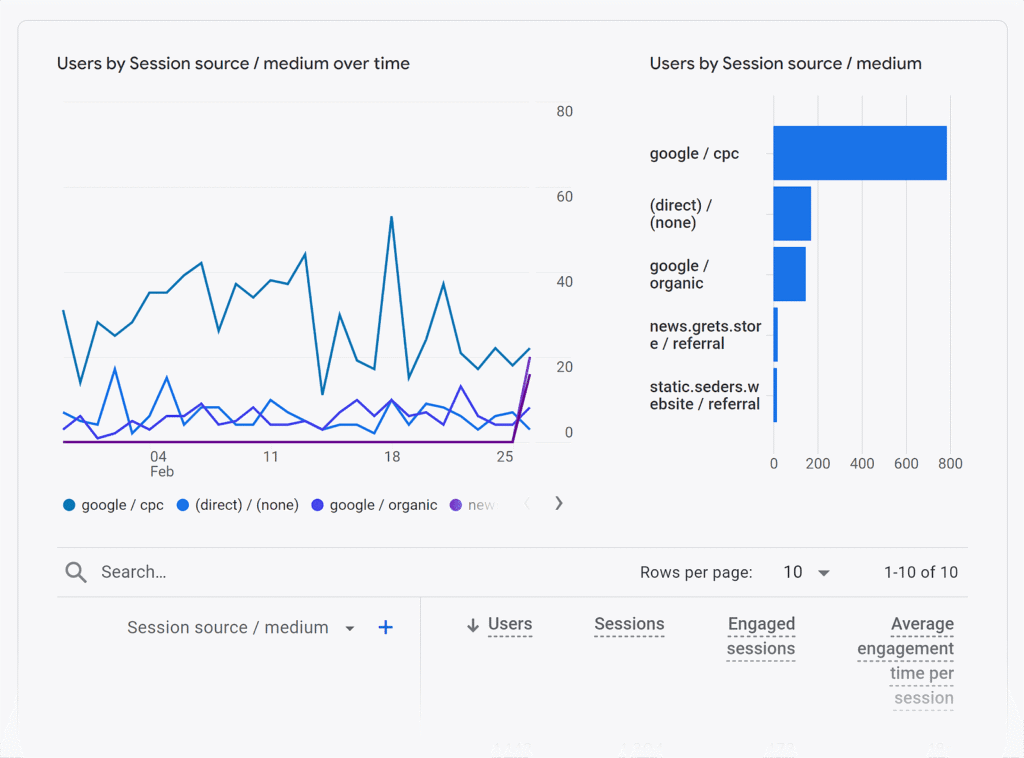
Organic Traffic: What It Is & How to Increase It (6 Ways)
Case Study 3: Land of Rugs (119% Page Views, £100K+ Revenue)
UK e-commerce site Land of Rugs ditched product-focused singles for clusters on “Rug Care” and “Home Decor Styles.” Pillars guided buyers; clusters compared materials and high-traffic options.
Impact: 119% page view spike in 2022–2025, attributing £100K+ revenue to content. By 2026, clusters funnel traffic to sales, proving non-blog sites benefit too. Lesson: Clusters bridge info to commerce, lowering bounce and boosting conversions.
Case Study 4: Brafton’s Content Strategy Overhaul
Marketing firm Brafton shifted to clusters in 2025, focusing on topics like “Content Marketing Trends.” Results: Enhanced authority, with clusters driving higher engagement and SEO lifts. Big names like HubSpot and Healthline continue validating this, with clusters yielding 30%+ traffic edges.
These flukes clusters consistently outperform, especially in 2026’s semantic-heavy environment.
Why It Works So Well in 2026 (Technical Reasons)
In 2026, SEO is less about keywords and more about entities, intent, and ecosystems making topic clusters a powerhouse. Google’s E-E-A-T (Experience, Expertise, Authoritativeness, Trustworthiness) framework, amplified by the Helpful Content Update, rewards depth over breadth. Clusters signal expertise by covering topics holistically, not piecemeal.
AI search tools like Google AI Overviews and Perplexity prioritize structured content. Single posts rarely get cited; clusters provide the interconnected data AI loves, increasing visibility in generative results. Internal linking supercharges this efficient crawl budgets mean faster indexing, while user signals (low pogo-sticking, high dwell time) boost rankings.
Behaviorally, clusters match modern searching: Users explore laterally, and sites keeping them onsite win. With GEO trends, clusters optimize for AI by building topical graphs. Bottom line: In a year where semantic search reigns, clusters aren’t optional; they’re the path to authority.
How to Implement It Step-by-Step (Practical Guide)
Ready to build? Here’s your 2026 roadmap, tailored for efficiency in an AI era.
Step 1: Audit Existing Content
Scan your site with Ahrefs Site Audit or Screaming Frog to identify orphans and gaps. Categorize posts by topics flag potentials for pillars.
Step 2: Choose Core Topics
Use Ahrefs Keywords Explorer for Parent Topic reports or Semrush Topic Research. Pick broad, demand-driven themes (e.g., “SEO Trends 2026”) that support 10+ subtopics.
Step 3: Keyword Research & Cluster Mapping
Leverage Semrush Keyword Magic or Ahrefs Content Gap to map subtopics. Avoid overlap and assign unique intents.
Step 4: Create the Pillar Page
Craft a 3k–7k word ultimate guide. Optimize for E-E-A-T with data, visuals, and author bios.
Step 5: Build 8–20 Supporting Stories
Write targeted clusters (800–2k words each), linking back to the pillar. Focus on user questions.
Step 6: Internal Linking & Monitoring
Implement bidirectional links. Track with Google Search Console and Ahrefs Rank Tracker. Update quarterly for freshness.
Expect results in 4–12 weeks, scaling to 30–100% growth in months.
Best Tools for Topic Clusters in 2026
Arm yourself with these for seamless execution:
- Ahrefs: Tops for parent topics and gaps essential for mapping.
- Semrush: Topic Research and Keyword Magic for clustering ideas.
- ClickRank AI: Automates semantic grouping for AI Overviews.
- Surfer SEO / Frase: Optimizes content depth and scoring.
- Notion / Airtable: Plans clusters visually.
- Google Search Console: Free tracking for performance.
AI tools like ChatGPT aid generation, but pair with classics for accuracy.
Common Mistakes to Avoid + Quick Wins
Pitfalls: Thin clusters (aim for depth), cannibalization (map intents), ignoring links (always bidirectional), or skipping updates (quarterly refreshes key).
Quick wins: Start small with one cluster, add schema for steps, use visuals for snippets, and repurpose old posts into clusters for instant lifts.
Conclusion + CTA
Single posts are relics; topic clusters build empires of authority in 2026. With AI favoring depth and users craving connections, this strategy delivers sustainable traffic, engagement, and conversions.
Pick your first topic now grab Ahrefs’ free trial, map your cluster, and watch rankings climb. What’s your debut cluster? Share in the comments!
FAQ
Q1: What is the main difference between topic clusters (multiple stories) and single-post content?
A: Single posts isolate ideas, leading to limited rankings. Clusters interlink for authority, driving 30–100% more traffic.
Q2: Do topic clusters still work in 2026 with AI Overviews and generative search?
A: Absolutely they thrive, boosting citations 2–3× by providing structure AI needs.
Q3: How many cluster pages should I create per topic?
A: 6–12 to start, scaling to 20+ for powerhouses like Minuttia’s 1,100-keyword clusters.
Q4: Can single posts still rank well in 2026?
A: For niches or news, yes but clusters dominate evergreens.
Q5: What’s the best way to choose a core topic for a cluster?
A: Use tools for demand; ensure it supports subtopics and aligns with goals.
Q6: How do I avoid keyword cannibalization in topic clusters?
A: Clear intent mapping and tools like Semrush prevent it.
Q7: How long does it take to see results from topic clusters?
A: 4–12 weeks initial, 3–12 months full, with 30–100% growth.
Q8: What tools do I need to build and manage topic clusters in 2026?
A: Ahrefs, Semrush, ClickRank, GSC, and planners like Notion.
Q9: Is topic clustering only for big sites, or can small/new blogs use it?
A: Ideal for small sites start with 1–2 for quick gains.
Q10: How often should I update my topic clusters?
A: Quarterly for freshness, annual audits for gaps.