


Beyond Smartphones: Tech Giants’ Bold Visions for AR, AI, and Ambient Tech in 2026
Introduction
In an era where smartphone upgrades often boil down to marginal improvements like sharper cameras or marginally quicker processors, the industry feels stuck in a loop of diminishing returns. But 2026 marks a potential tipping point, where the familiar glowing rectangle in our pockets begins to evolve or even fade into something more seamless and integrated. As tech giants envision a future beyond smartphones, they’re channeling massive investments over $150 billion collectively into augmented reality (AR), artificial intelligence (AI), brain-computer interfaces, and ambient computing ecosystems that promise to liberate users from screen dependency.
Ambient computing refers to a world where technology operates unobtrusively in the background, anticipating needs and providing assistance without demanding constant interaction. It’s not about flashy gadgets but about creating intuitive, always-on support that blends into daily life. Tech giants are no longer just refining phones; they’re constructing ecosystems that could render them optional, shifting focus from handheld devices to distributed computing across wearables, AI agents, and spatial interfaces. By prioritizing AI-driven companions and hyper-connected environments, these companies are redefining how we interact with the digital world, moving toward a post-smartphone era.
Meta: The Pivot from Metaverse to “AI Wearables”
Mark Zuckerberg’s Meta has undergone a notable strategic realignment, dialing back ambitious full-scale virtual reality (VR) metaverse dreams in favor of practical mixed-reality solutions and lightweight smart glasses infused with AI. This shift emphasizes accessibility over immersion, positioning wearables as the gateway to everyday AI utility rather than escapist virtual worlds.
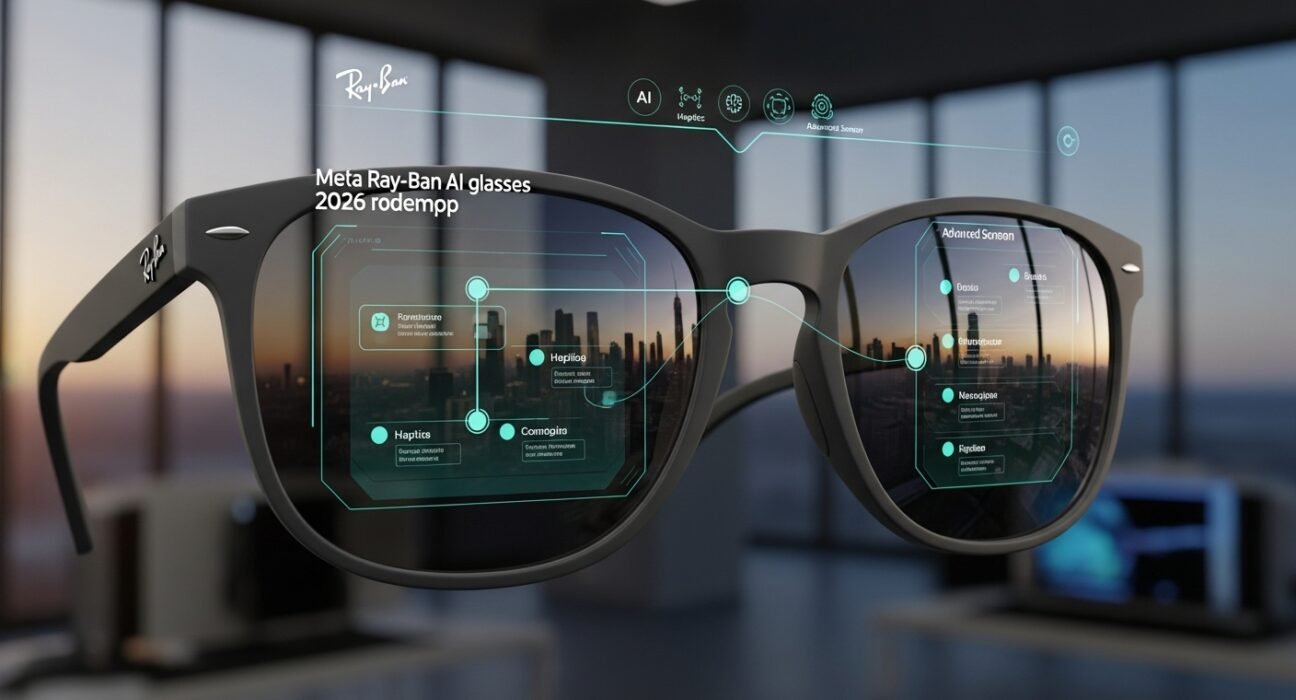
In 2026, Meta plans to significantly scale up production of its Ray-Ban smart glasses, with discussions underway to double capacity to 20 million units or more by year’s end, potentially exceeding 30 million if demand surges. These glasses integrate “agentic AI” proactive systems that not only respond to queries but take independent actions based on user context. Features include real-time audio, visual overlays, and seamless integration with Meta’s broader AI ecosystem, allowing the glasses to handle tasks like capturing photos, streaming content, or conversing with an AI assistant.
The key insight here is Meta’s bet that AR’s true “killer app” isn’t gaming or social simulations but an omnipresent AI companion that perceives the world through your eyes, offering contextual help without pulling you away from reality. This approach aims to make technology feel like an extension of human senses, reducing reliance on smartphones for quick interactions.
Google: “AI Utility” and the Return of Glass
Google is steering away from gimmicky hardware toward “AI utility,” where its Gemini AI becomes the central nervous system of personal computing, extending far beyond apps and searches into a holistic life OS. This vision revives the spirit of the original Google Glass but with modern refinements to avoid past pitfalls like privacy concerns and clunky design.
Set for a 2026 launch, Google’s Gemini-powered AI glasses will come in two variants: an audio-first model emphasizing voice interactions via speakers, microphones, and cameras, and a display-first version with in-lens screens for visual overlays like navigation or translations. Built on the Android XR platform, these glasses integrate with Samsung’s tech and eyewear partners like Warby Parker and Gentle Monster, supporting cross-device ecosystems including iOS compatibility. Android XR positions itself as an open platform for spatial computing, enabling apps, AI, and third-party hardware to thrive.
Google’s core insight is winning the “context war” leveraging AI to grasp your location, activities, and needs preemptively, delivering assistance before you even ask. This audio-first approach prioritizes subtlety, making the glasses feel like a natural augmentation rather than a distracting gadget.
Apple: The Slow Burn to “Invisible” Tech
True to form, Apple adopts a deliberate “wait and perfect” strategy, refining technologies from its premium Vision Pro headset into more consumer-accessible formats without rushing flawed products to market. The company is transitioning Vision Pro’s advanced spatial computing into lighter, affordable eyewear, bridging the gap between high-end immersion and everyday wearability.
Rumors point to “Apple Glass” entering the spotlight in late 2026, with a possible launch in early 2027. These glasses will leverage Apple Intelligence on-device AI for tasks like visual search, language translation, and personalized motivation during workouts to connect seamlessly with iPhones and other devices. Features may include AR overlays, spatial audio, and integration with visionOS for immersive experiences without the bulk of a full headset.
Apple’s insight: The iPhone evolves into a pocket “server” handling heavy computation, while glasses serve as the lightweight “screen,” making tech feel invisible and intuitive. This ecosystem approach ensures privacy and polish, potentially displacing smartphones for routine tasks.
Microsoft & Samsung: The Enterprise & Infrastructure Backbone
Microsoft’s role emphasizes software over hardware, with HoloLens serving enterprise needs but Copilot AI taking center stage. Agentic AI in Copilot enables workplace automation, such as attending virtual meetings, summarizing discussions in real-time via earpieces, or coordinating across teams. This positions Microsoft as the enabler of collaborative human-AI workflows, transforming productivity in sectors like healthcare and education.
Samsung, meanwhile, eyes the 6G horizon to underpin ambient tech. While full 6G rollout is projected for 2028-2030, 2026 sees early strides in hyper-connectivity hardware, allowing devices to communicate with near-zero lag crucial for seamless ambient ecosystems. Samsung plans to deploy 800 million AI-powered devices this year, integrating AI-native features for sustainability and vertical services like IoT and robotics. This infrastructure supports a world where connectivity is ubiquitous, powering the shift from smartphones to distributed intelligence.
The “So What?”: The Era of Ambient Computing
This collective push heralds a shift from traditional user interfaces (UI) to “no interface” at all where AI and AR anticipate actions, minimizing explicit commands. The benefits are profound: reduced screen time frees up more engagement with the real world, as technology assists subtly, like whispering directions or summarizing emails without pulling out a phone.
However, risks loom large. Privacy concerns arise from always-on AI that watches and listens, potentially exposing sensitive data. Battery life remains a bottleneck for wearables, and the environmental impact of scaling production demands sustainable practices. Balancing innovation with ethical safeguards will define ambient computing’s success.
Conclusion
In summary, 2026 isn’t the death knell for smartphones but the dawn of an era where they become optional for many interactions, thanks to AR glasses, AI agents, and ambient tech ecosystems. Tech giants like Meta, Google, Apple, Microsoft, and Samsung are forging paths that distribute computing intelligence, making devices feel like natural extensions of ourselves.
The device of the future isn’t a superior rectangle, it’s a pair of glasses paired with a whisper in your ear, unlocking hyper-connected experiences. Would you trade your smartphone for a pair of capable smart glasses? Let us know in the comments.