



Trump Segregated Facilities: What the Policy Change Means

A new movement in policy on federal contracting in the United States has attracted interest due to its implications on civil rights and equality. The clause in federal contracts, which specifically declared segregated facilities, has been eliminated during the administration of Donald Trump. The change raises questions concerning the meaning of segregated facilities, why was there a clause in the first place and what the clause may imply to contractors and the wider society.
Understanding the Change
Segregated facilities psychologically signifies waiting rooms, drinking fountains, restrooms, restaurants, transportation, housing or working areas, among other types of segregation, which is based on race, color, religion, sex, or national origin and other identities. Previously, the federal law demanded that contractors dealing with the government should not enforce or condone such segregation.
In March 2025, the General Services Administration (GSA) published a memo that new federal contracts will no longer include the clause (which is called Prohibition of Segregated Facilities The elimination of this clause implies that new federal contracts will no longer mention an explicit ban on segregated facilities but instead covers broader federal and state civil rights laws.
This modification did not immediately legalize segregation on its own, but it eliminates a contractual tier of implementation or notice that has been the norm since the Civil Rights Era. According to critics, the change sends a symbolic message concerning the priorities of the administration.
Why the Clause Existed
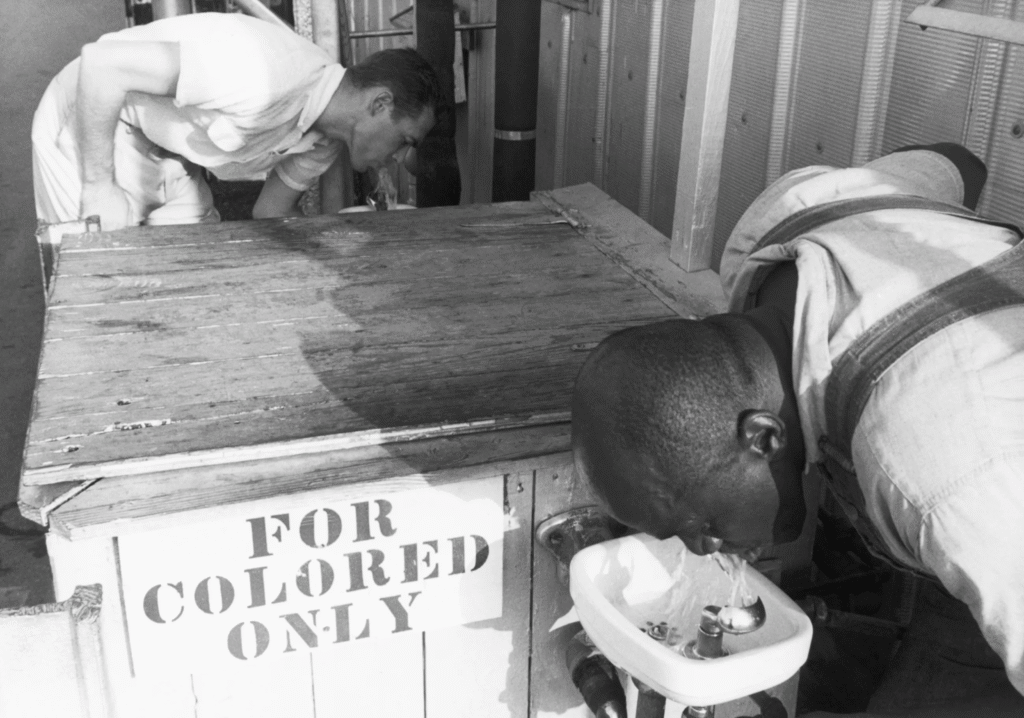
The initial provision can be traced to the initiatives following the enactment of the Civil Rights Act in 1964 and the following executive orders which were aimed at preventing segregation and discrimination in places of work and facilities that were affiliated with federal programs. The clause in the contract made the legal expectation of having integrated policies and not separated facilities depending on the identity of the contractors stronger.
Since federal contracting has an impact on numerous sectors, construction, services, supplies, the inclusion of the clause was a civil rights policy tool. It also reminded the contractors and provided grounds of enforcement of a contract in case of segregation.
What Changed Under the Trump Administration
Under President Trump’s directive on diversity, equity and inclusion (“Ending Illegal Discrimination and Restoring Merit-Based Opportunity”), the administration chose to remove the explicit “segregated facilities” clause from federal contracting documents. The GSA memo states that the clause is “not consistent with the direction” of the President’s executive order.
According to the advocates of the change, it will lessen the burdens of bureaucracy, eliminate the need for redundant language (as the core civil rights acts remain in effect) and focus more on opportunity based on merit than identity-based regulation. The administration believes that other legislation like the civil rights act are still relevant and enforce non-discrimination.
Critics point out that the repeal of this provision is not symbolic: by repealing a default contractual prohibition, the express requirement that a federal contractor confirm that it does not operate or allow segregated facilities is eliminated. Although segregation could be against the law in other laws, the contract clause had brought clarity and deterrence.
Implications for Contractors and the Workforce
In the case of businesses involved with federal contracting, the change at hand which will have an immediate practical effect is that the clause of the prohibition of segregated facilities will not be present any longer in new solicitations or awards. The contractors will not have to affirm that they have no segregated facilities in the identical contractual language.
Nevertheless, the larger legal requirements are still there. Contractors are obligated to abide by the federal and state anti-discrimination laws even without the clause. In case a contractor should incorporate or sustain facilities which segregate employees on the basis of race, sex, religion or some other safeguarded trait, they could be subject to legal proceedings through additional laws, litigation or enforcement procedures.
Workforce wise, the change can be an issue of suspicion or doubt. Workers of federal contractors may raise the question about whether their rights or the workplace culture are affected by the removal. Although their legal provisions are still under civil rights legislation, the lack of a specific contractual provision makes their regulation somewhat different.
The symbolism of the change also matters: the elimination of a provision connected to segregation sends a message concerning the orientation of the policy. Various civil rights activists believe that although the law may not be changed, the elimination of such contract language may dilute the guardrails and lower the consciousness or enforcement of the norms of integration. cfpublic.org.
Historical and Social Context
It is useful to remember the period when segregated facilities were rife in the United States. The elimination of the explicit language of the contract to prohibit segregation was a demonstration of the bigger struggle to achieve civil rights and integration. Decades of regular implementation of non-segregation provisions contributed to the regularization of inclusive facilities in the workplace and government contracting.
Regarding that, the move to delete the clause provokes some major concerns with regards to the way we perceive equality today. When no longer affirmative requirements of integrated facilities are made by the government contractors, then does this change the threshold expectation? According to many observers, yes, they move away away out of an active requirement in contracts and resort to an appeal to only general civil rights legislation.
This change is a wider political scene. Other changes made under this administration have been in the diversity, equity and inclusion programs, federal enforcement priorities and civil rights policy in general. As an example, the ruling is connected to the attempts at repealing the previous executive orders that mandated affirmative action or gave precedence to inclusion initiatives.
Looking Ahead: What to Watch
In the future, there are a number of areas that can be considered. First: the ways the agencies and contractors will adapt to the lack of the clause. Will the contracting officers have alternative language, extensively depend on other clauses or do they assume that the civil rights laws are sufficient on their own?
Second: whether enforcing or suing can demonstrate the effects of the change. In case the contractors were previously discouraged by the terms of a contract, its abolishment can have an impact on behaviour. Tracking of reported instances of purported segregated facilities/discrimination during contracting situations will be informative.
Third: the worker and community perception. The elimination of the contract language can make the rights of the employees of federal contractors less evident and clear even when such legal protections are present. It is important to make sure that employees are educated about their rights and the way they should behave.
Finally: how this policy change intersects with public sentiment and future administrations. If contract clauses become more voluntary or less specific, future shifts in policy may either strengthen or relax oversight of segregation and discrimination in facilities tied to federal contracting.
Conclusion
The removal of the “Prohibition of Segregated Facilities” clause from federal contracts under the Trump administration marks a noteworthy shift in policy. While it does not dismantle the legal foundations of non-segregation in the United States, it reduces a distinct contractual affirmation of that principle. The broader legal protections remain in place, but their contractual reinforcement has been altered.
For businesses, contractors and workers alike, the change invites reflection on how civil rights norms are upheld, how policies shape workplace culture and how enforcement is structured. At a deeper level it challenges society to consider whether equality is best preserved through explicit contractual language or by broader legislative frameworks.
In today’s environment, awareness, transparency and vigilance matter more than ever. Recognising what has changed, and what remains, helps ensure that commitments to inclusive facilities and non-discrimination are not merely symbolic but effective in daily practice. As agencies, contractors and employees navigate this new terrain, the principle remains the same: that all people deserve access to fair and respectful treatment in all workplaces, whether tied to federal contracts or not.
FAQs
Does this change mean segregation is now legal in federal contractor facilities?
No. The removal of the contract clause does not legalize segregation. General federal and state civil rights laws, such as the Civil Rights Act of 1964, still prohibit segregation and discrimination based on race, color, religion, sex, or national origin. Reuters+1
Why was the “Prohibition of Segregated Facilities” clause important?
The clause served as a clear contractual requirement for federal contractors, reinforcing civil rights obligations and giving contracting officers a basis to act if violations occurred. Its presence also functioned as a visible commitment to integration and inclusive practices.
What do “segregated facilities” cover?
The term has historically encompassed waiting rooms, dining areas, restrooms, transportation, housing, locker rooms, work areas and other service or amenity spaces where separation could be based on race, sex, religion or other protected characteristics.
Will federal contractors face fewer obligations now?
Contractors will no longer need to include the specific clause when entering into new contracts that the government issues. However, they still must comply with federal and state laws prohibiting discrimination and segregation. The enforcement mechanism may shift.
How does this change affect employees at federal contractor facilities?
Employees retain their rights under general civil rights statutes. Nonetheless, the absence of a contract clause may make awareness of rights less obvious in contracting contexts. Workers may need to rely more on broader protections and internal policies.