



What Do Termites Look Like? A Complete Guide to Identifying Termites in Your Home

By asking yourself what termites look like, you are making a step in the right direction to becoming aware of the danger that is easy to ignore until you realise it is a big problem. Termites can be small and seemingly innocent but the silent manner in which they destroy wood and structures makes them a significant issue to house owners. In this paper we will discuss in simple, easy to understand language, what termites exactly look like, how they vary according to their functions, and why understanding how they appear is important. At the end, we also are going to present some useful FAQs to answer the most frequent questions.
Basic Appearance and Size
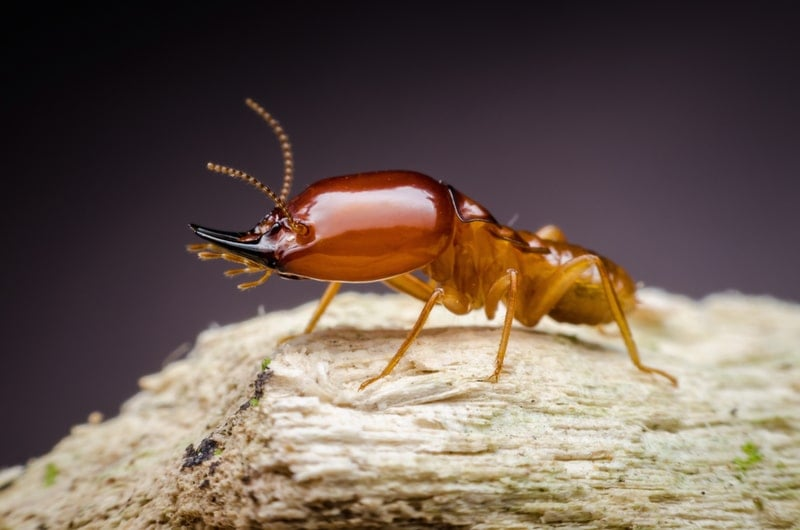
The insects are called termites and have a soft body with dimensions ranging between 1/4 to 1/2 inch long, depending on the species and caste. They are pale, creamy white, light tan or pale brown when the worker caste; when the swarmers or breeders they are darker brown or even black. They lack the distinctive waist of ants, the abdomen and thorax blend together in a much smoother fashion and make the body appear uniform in width. The antennae of theirs are straight and beaded, not bent at the elbow, and so the insects can be distinguished by it.
Different Castes: Workers, Soldiers and Swarmers
A colony of termites has several kinds of termites which slightly vary in their features. The least noticeable worker termites are those that one would not care to notice without making a disturbance on infested wood. They are usually pale, soft bodied and wingless. Looking at them they may appear almost as little rice grains strolling slowly along. Soldiers are bigger headed, have more powerful mandibles (jaws) and they are constructed to defend the colony and not to forage. To take an example, one species is pale bodied but dark headed. Next comes the reproducing termites commonly referred to as swarmers or alates. They usually possess two pairs of similar size of wings, and these termites are usually darker in colour, and the task of this group of termites is to fly off to begin new colonies at the right time.
Colour Variations and Why They Matter
A termite is a colour that is determined by the caste and species as well as the stage of development. An illustration is that when you observe creamy white or pale tan termites, then, it is probably workers chewing wood by the inside. Terminix When the termites are seen swarming around, brown or black, this is an indication that the reproductives have left the colony. The colour change will serve as a guide: lighter-coloured termites tend to indicate more secret activity in the interior of the wood, whereas the darker ones are more accessible and can be seen in dispersion of the colony.
Shape and Anatomical Features
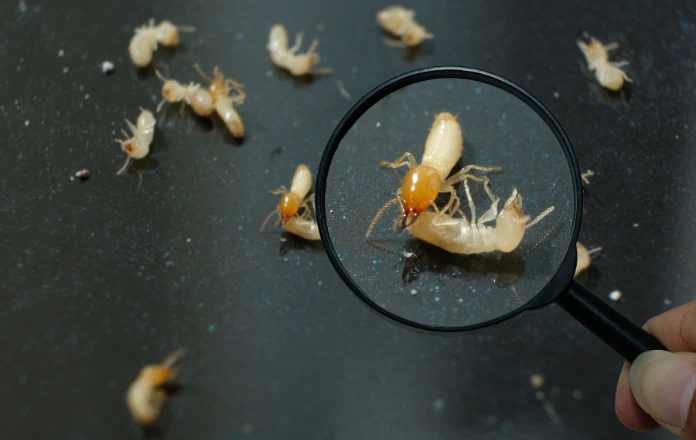
By taking a closer look at a termite you would find some important characteristics. The termites also have a relatively constant width between body parts unlike the ants that have a thin section between the thorax and the abdomen. Wings on the swarmers are almost equal to the front and the back, and considerably longer than the body. This is unlike flying ants where its front wings are bigger than the hind wings. The straight antennae of Termites are also used with the elbowed or bent ones of the ants. Such information might not seem much but it comes in handy when you need to discover whether or not the insect in your house is a termite or not. One of the guides states that the termites possess straight antennae, equal length wings, and the same waist compared to ants.
Behavioural Appearance: What You Might See
Very frequently you will not be able to see the termites crawling in plain sight as they are covered in wood, between walls or under foundations. Nevertheless, there are certain visual hints. In case swarmers have come, you are likely to find heaps of small wings in the vicinity of windows or doors. Internal tunnelling can result in discoloured wood surfaces, blister, sagging floors or hollow sounding when tapped timber. There are species of termites that construct wall or foundation tube and tunnels of mud and pieces of wood to reach food sources. The mere presence of one of these cues may indicate that the termites are already active and time to take action.
Why Knowing What Termites Look Like Is Important
By understanding the appearance of termites, you can be able to detect an infestation when it is still young before it advances to cause numerous damages. Due to the fact that most cases start being concealed behind walls or under the floor, the sooner you detect the symptoms, the faster you can react and save your house. Home insurance that is traditional is usually not inclusive of termite damage. Learning about their looks also will assist them in avoiding the wrong cure: errors like use of ants when you have termites can be followed to the incorrect way or cure. The fact that swarmers of termites possess as large wings as the others, whereas ants do not, or that the termite has straight antennae and the ant has bent ones, will help you save time and money.
What to Do If You Spot Something
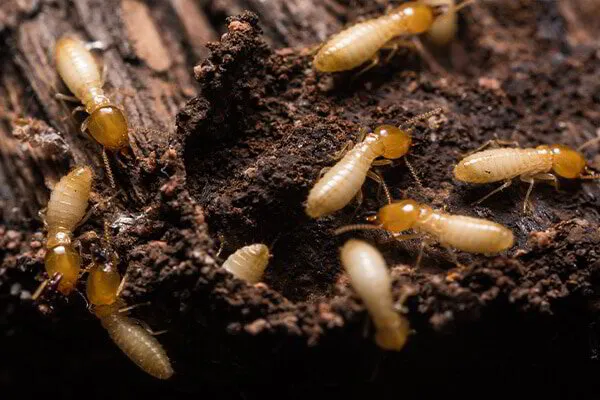
When you are suspecting that you have seen termites you should not disregard. Store a sample in a sealed container or take a photograph of it particularly the wings in the case of winged insects. Search in the signs of others such as mud tubes, hollow sounding wood or wood that easily crumbles when touched. Thereafter call the services of a competent pest control company to have a check up. It is always advisable to take an early action before damage manifests itself.
Final Thoughts
Knowing the appearance of the termites is the initial guard to the house. They can be little and yet, they can have great influence. With appreciation of their look, conduct and indications of infestation you provide yourself with a considerably greater opportunity to detect the issue at its inception. You may plan to see pale worker termites burrowing silently in the wood, or dark winged swarmers around the windows, but the instant you notice that there is something wrong is the time you need to take action.
It is important to remember that the appearance of the termite might change according to species, caste, and environment, and therefore in case something is out of order it is worth being cautious. Knowing this information in this article you will be better prepared to know what do termites look like as well as to safeguard your house before the infestation will cost a lot.
Frequently Asked Questions (FAQs)
How Can I Tell if the Insect I Saw Is a Termite or Just an Ant?
One of the best ways is to look at the waist and antennae. Termites have a thick waist without a constriction between thorax and abdomen, their antennae are straight and not bent, and if wings are present the front and back wings are about the same size. By contrast, ants have elbowed antennae, a narrow waist, and the front wings are larger than the hind wings.
Are All Termites the Same Colour?
No. Termites vary in colour depending on species and caste. Worker termites are often pale white or tan; swarmers may be dark brown or black. Some species appear translucent or very light in colour.
If I Only See Winged Termites (Swarmers), Does That Mean There Is an Infestation?
Yes, seeing winged termites often indicates that a colony is mature and reproducing. The swarmers leave the nest to mate and start new colonies. While one swarmer alone might not guarantee full infestation, it is a strong warning that you should investigate.
Can Termites Cause Visible Damage Before I See Them?
Absolutely. Many termite infestations are well advanced before you notice the insects themselves. You might first spot sagging floors, hollow‑sounding wood, blistered paint or mud tubes. These signs show that termites are active and feeding inside the structure.
What Should I Do If I Suspect Termites in My Home?
Do not delay. Start by checking for physical signs and documenting anything unusual photos, samples. Then contact a licensed pest control professional who can inspect, identify the species, assess damage, and recommend a treatment plan. Early treatment is much more cost‑effective than waiting.